Late replenishment
Cooking starts when a tray is already low, so the batch lands after the pan is empty.

SmartBuffet AI watches every tray in real time, predicts when a dish will run out, and tells the right cook before a guest ever meets an empty pan.
Buffet service still runs on walk-past checks. By the time a steward notices a low pan, the next batch is twenty minutes away, and the guest has already seen the gap. SmartBuffet AI turns each tray into a live signal the pass can act on.
Cooking starts when a tray is already low, so the batch lands after the pan is empty.
A well-arranged platter can hide how little food remains. The eye is not a scale.
Holding temperatures and corrective actions live in clipboards rather than a timestamped record.
Nobody can say how long a tray stood empty, or how fast the kitchen answered.
Each technology answers the question it is best at. The decision layer combines them into one instruction for the kitchen.
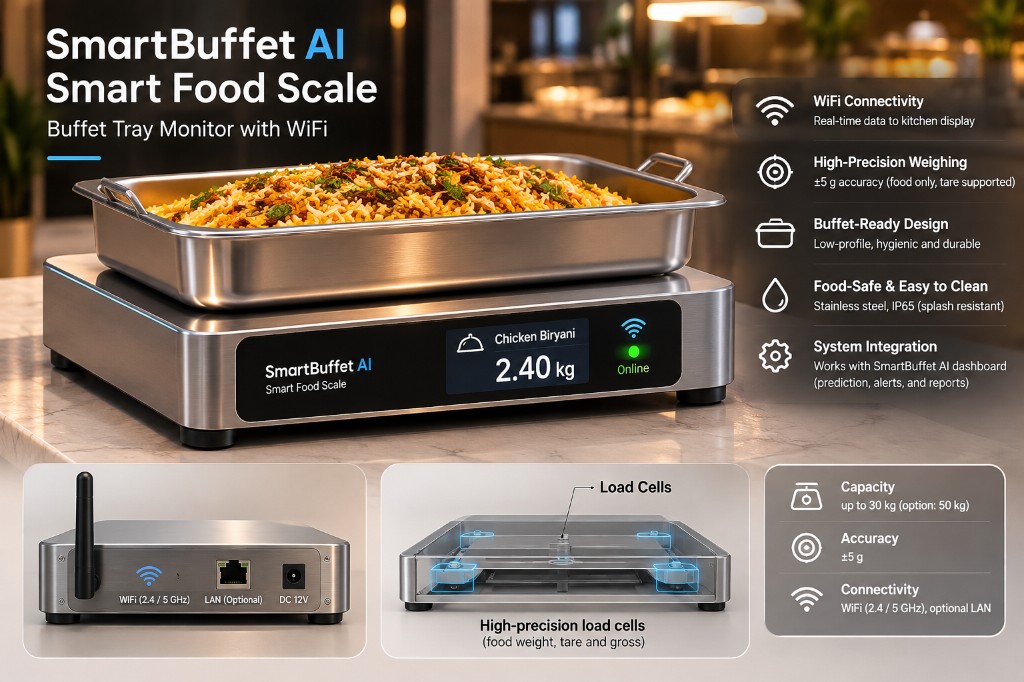
A load cell under each pan reports food weight with the container tared out. This is the source of truth for quantity, pace, and refills.
One overhead camera covers several platters, identifies each dish, and flags bare or misleading trays. It explains; it does not weigh.
Probes on hot and liquid dishes watch the holding band. A full tray never clears a temperature problem.
Pace, prep time, and status become one instruction: start the batch, refill now, or check the probe.
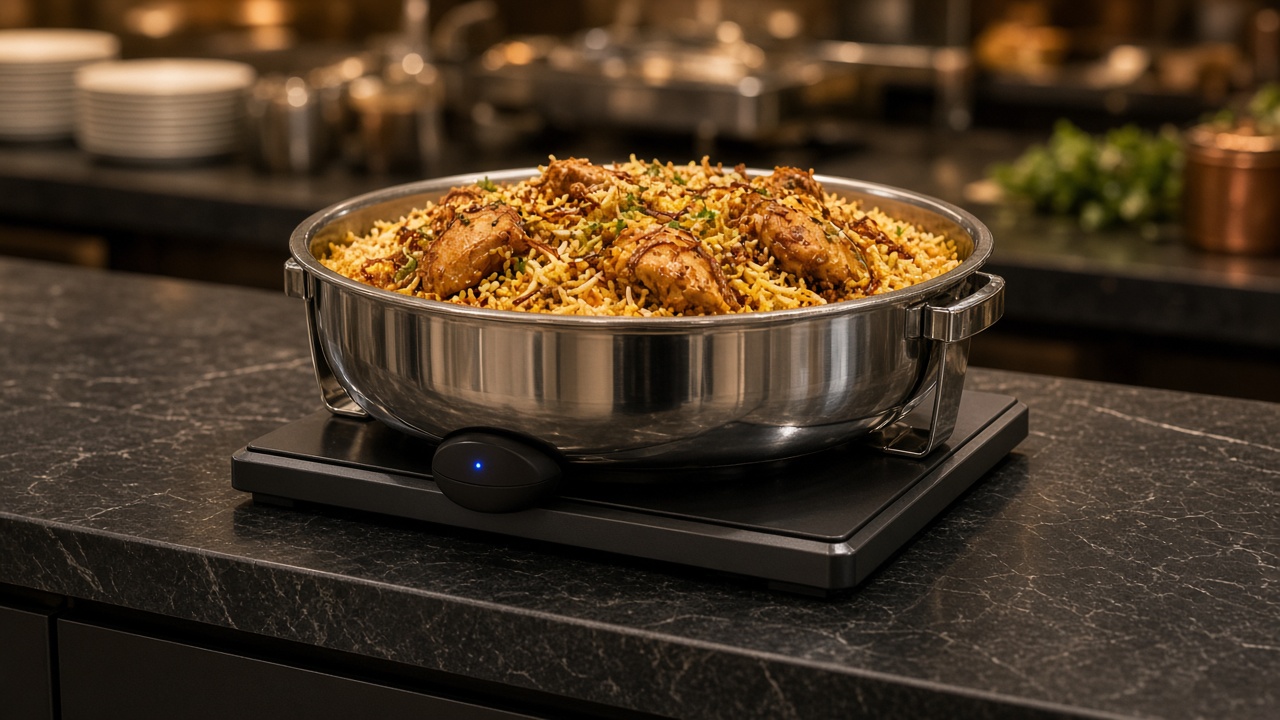
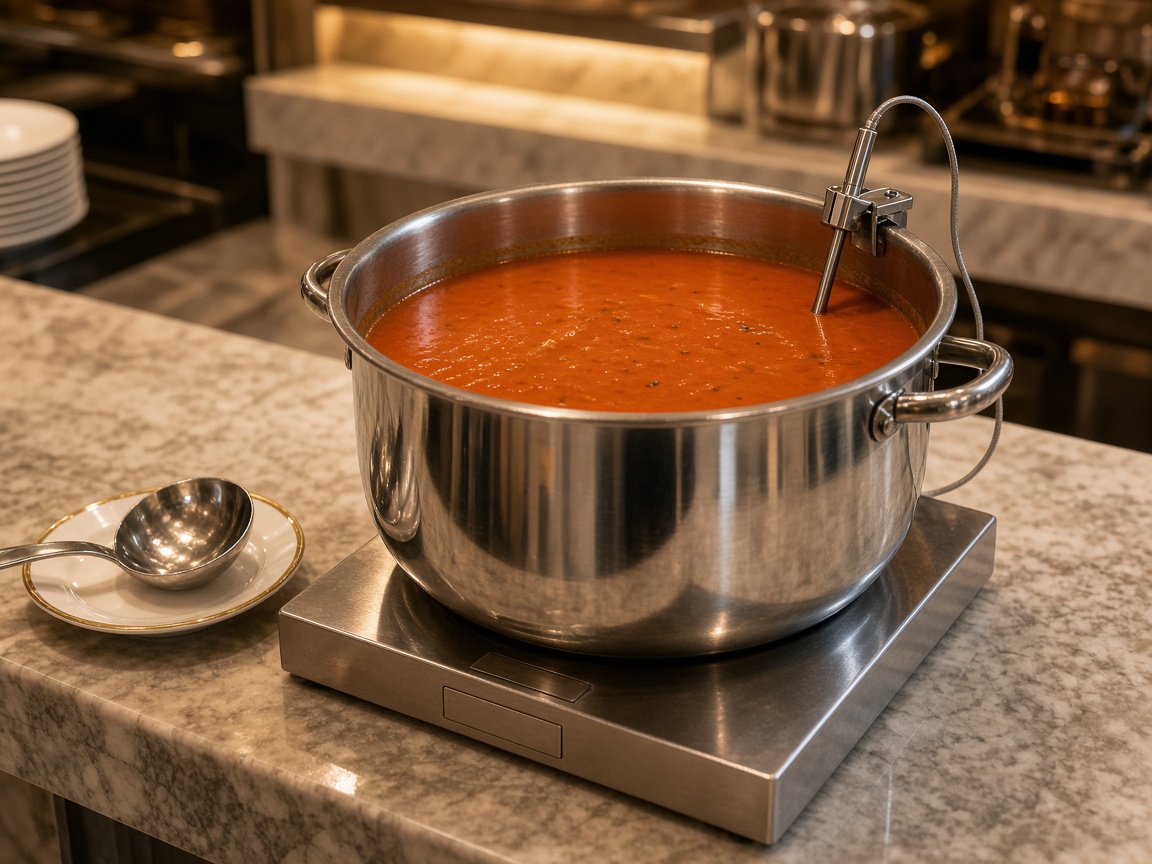
The SmartBuffet monitoring unit combines a high-precision load-cell platform, an overhead AI camera, and an optional temperature probe. Live weight, dish recognition and holding temperature feed the kitchen display in real time.
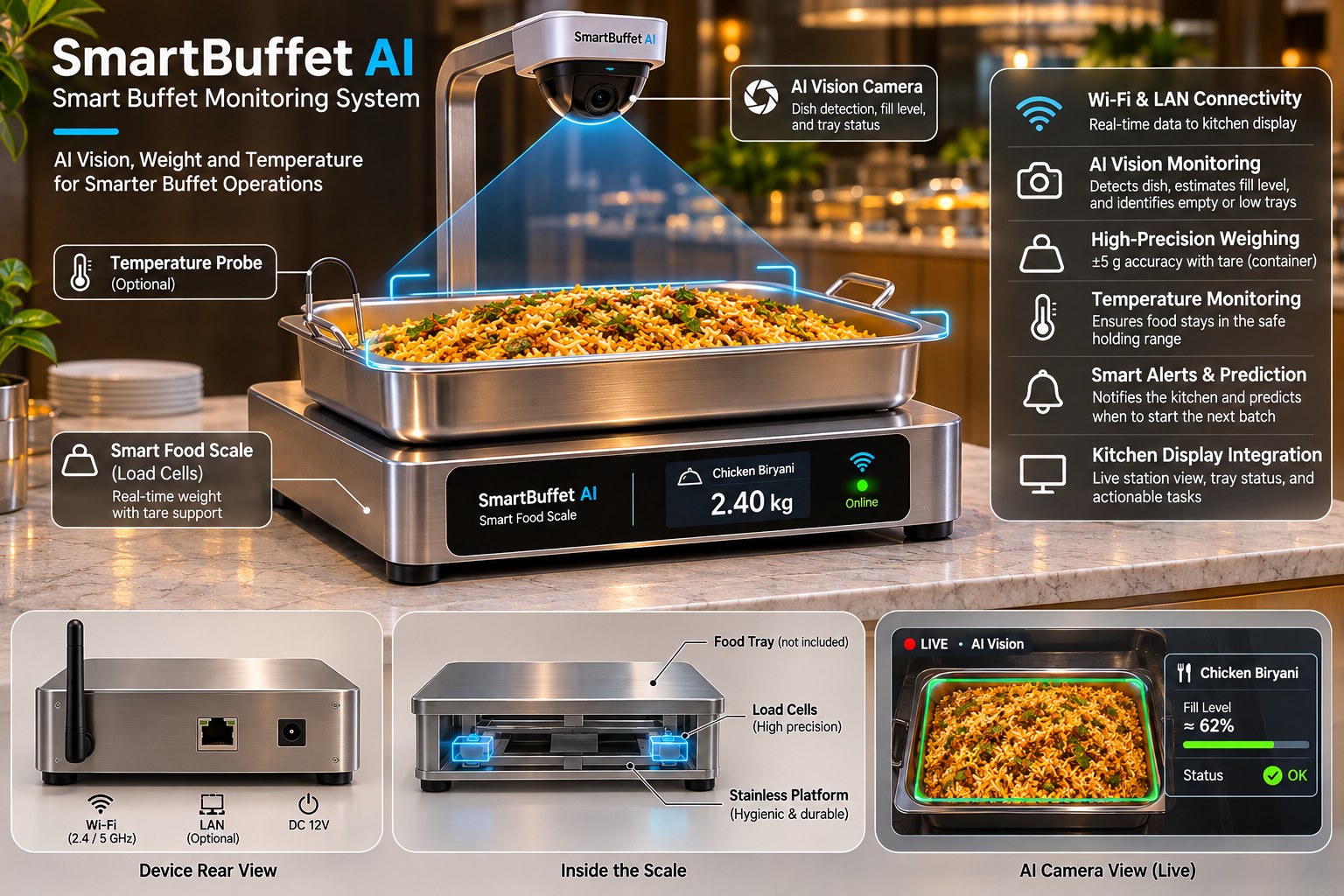
Load cells with tare support and about ±5 g accuracy. Food weight only — the container is excluded.
Detects the dish, estimates fill level and flags empty or low trays. One camera can cover a station zone.
Optional holding-temperature monitoring keeps hot dishes inside the safe band, separate from weight.
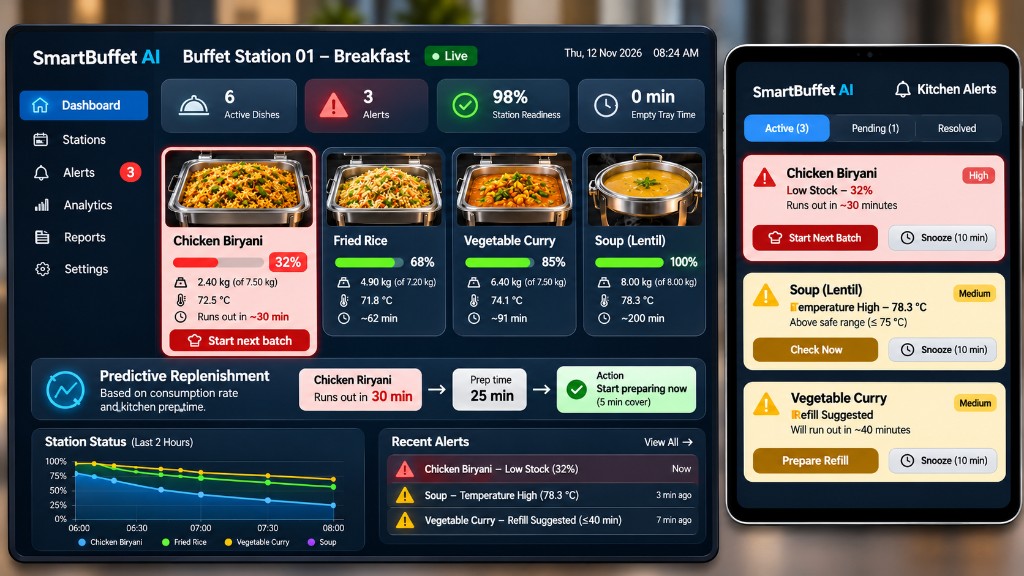
The kitchen display runs a full breakfast station in the browser. Every rule shown on this page is working on that screen, with simulated sensors standing in for real ones.
Every capability below is working in the proof of concept today.
Compares time-to-empty with kitchen prep time and asks the pass to start cooking while there is still cover, not after the tray is low.
When the camera sees a fuller tray than the scale measures, the display says so and trusts the weight. Disagreement is shown, never hidden.
Every weight change is classified: guest serving, refill, top-up, or a utensil spike. A refill is never mistaken for negative consumption.
Alerts go to the cook assigned to that tray. One alert per condition, and an unanswered critical alert escalates to the supervisor.
A placed tray settles into food, tare, and gross before a new full batch is confirmed. Unstable readings are rejected.
A live map of the counter shows each tray's fill, status, and temperature at a glance, from the pass or a tablet.
Before doors open, the station reports how many trays are full, in temperature, and online. Service starts from a verified state.
The system counts the minutes guests faced a bare tray. It is the clearest single measure of buffet service quality.
Each tray shows how long its batch has been out. The AI recommends the next batch; the chef approves or holds it.
A percentage tells you where a tray is. Pace tells you where it is going. SmartBuffet AI compares the two with the time the kitchen needs.
Start preparing the next batch now. Starting now leaves about 5 minutes of cover before the tray is empty.
2.4 kg ÷ 0.08 kg per minute = 30 minutes.
30 minutes is inside 25 + 5, so the kitchen is asked to begin. The chef approves the batch; the system never cooks or changes the weight on its own.
The rate uses the servings in the last fifteen minutes. A pilot would tune this window and the cover margin on real service data.
A pineapple platter reads 4,400 g gross on a 1,200 g tray. The system reports 3,200 g of fruit, which is 80% of the 4,000 g full batch.
| Remaining | Status | Kitchen response |
|---|---|---|
| Above 60% | Normal | Continue monitoring |
| 41–60% | Monitor | Visible on the card |
| 21–40% | Replenish soon | Schedule the next batch |
| 1–20% | Low stock | Critical: prepare now |
| 0% | Empty | Critical: refill immediately |
| Dish | Sensing | Full batch |
|---|---|---|
| Pineapple slices | Weight + camera | 4.0 kg |
| Watermelon | Weight + camera | 5.0 kg |
| Chicken biryani | Weight + probe | 8.0 kg |
| Fried rice | Weight + probe | 7.0 kg |
| Vegetable noodles | Weight + probe | 6.0 kg |
| Tomato soup | Weight + probe | 5.0 kg |
Thresholds are configurable per dish. These values are starting points for the pilot, agreed with the executive chef.
An overhead camera draws a region around each platter, recognises the dish, and compares what it sees with what the scale measures. When the two disagree, the weight wins and the screen says why.
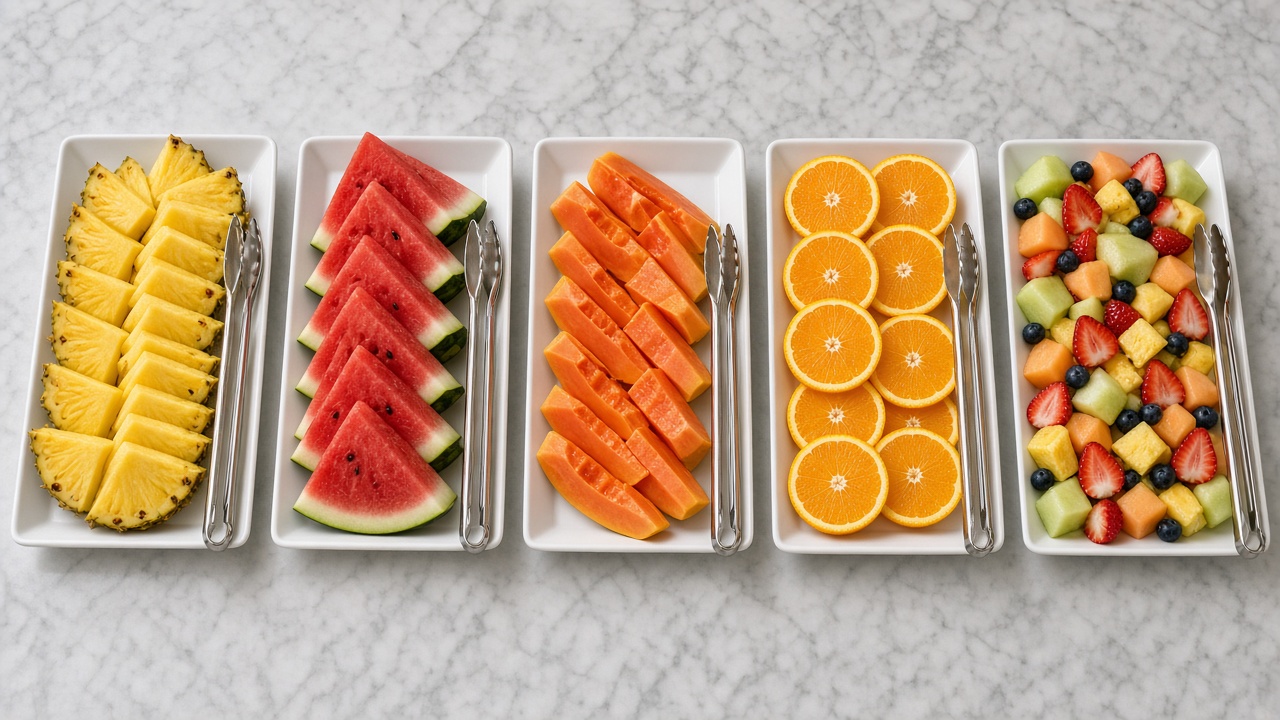 Pineapple · 80%
Watermelon
Each region is tied to a registered dish, so a swapped platter is noticed.
Bare corners, spills, and uncovered food are flagged for a steward to verify.
Cameras frame the food, not the guests. No face recognition is used.
The scale crosses a band or the pace shortens.
Time to empty is compared with prep time.
The assigned cook receives one alert.
Response time is recorded by role.
Weight rises; the event is logged as a refill.
Status resets; temperature is checked separately.
A full tray can still be unsafe. SmartBuffet AI keeps temperature, time, and corrective action as their own record, supporting the hotel's HACCP plan rather than replacing it.
The demo uses 57°C, the FDA Food Code 2022 hot-holding figure. The pilot adopts the limits in the hotel's approved HACCP plan and applicable Sri Lankan regulations. Sensors support staff judgement; they do not declare food safe.
The station keeps working through a network outage. Sensors report to a local gateway, and the kitchen display never depends on the internet to show an empty tray.
An NFC or QR tag on each pan binds the dish, tare, and batch the moment it touches the platform. No manual registration.
A hotel-set time limit per dish prompts staff to swap in a fresh pan rather than top up an old one.
Remaining weight is recorded per tray at the end of each service, the foundation for waste analytics later.
Each registered dish carries its allergens, ready for staff tablets and guest-facing displays.
Empty-tray minutes, response times, refills, and temperature excursions summarised for the executive chef.
The device naming runs hotel to sensor, so twenty trays grow to two hundred without redesign.
Acceptance targets are agreed during the site assessment, after the hotel's own dishes and counters have been seen.
Real load cell and probe, verified against a reference scale, including pan changes and utensils.
A full breakfast service with kitchen staff using acknowledge and refill on the display.
Expand to more stations and outlets once accuracy and adoption are proven on the first.
A working kitchen display with prediction, vision, and safety signals, ready to demonstrate.